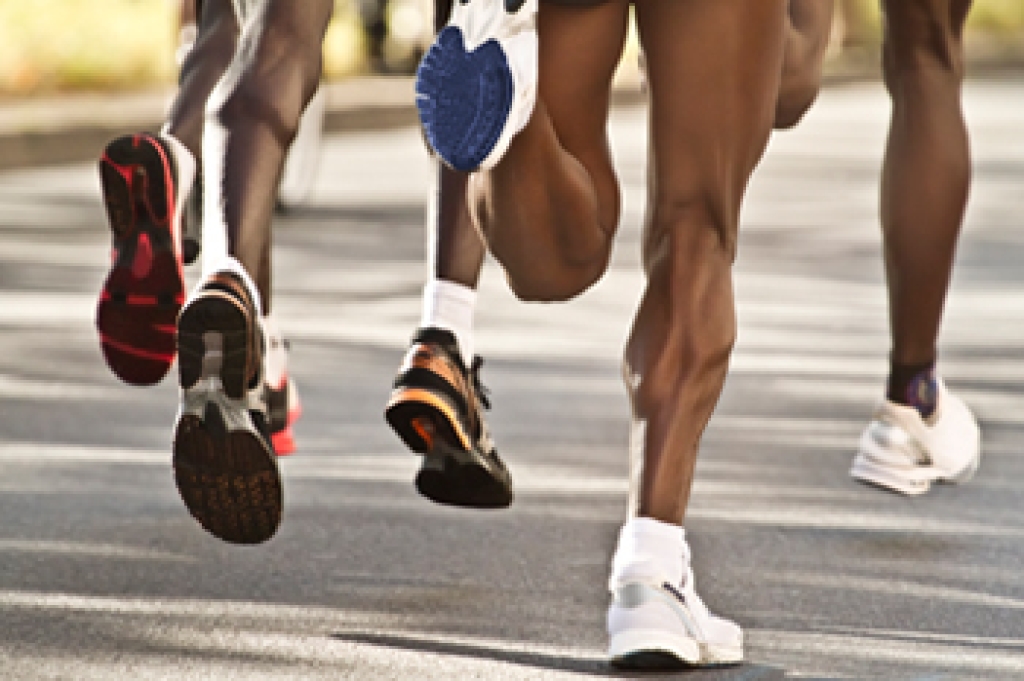
Choosing the right running shoes for a marathon can help protect your feet and keep you comfortable over long distances. The best marathon running shoes fit well, provide suitable cushioning, and hold your feet securely without feeling tight. Shoes that do not match your foot shape or running style may contribute to blisters, heel pain, or soreness around the toes. Since marathon training places repeated stress on your feet, selecting appropriate footwear is an essential part of preparing for race day.
Comfort should be your first priority when trying on running shoes. Look for enough room to wiggle your toes, with a secure fit around the heel and midfoot. Your toes should not press against the front of the shoe, especially when running downhill. Cushioning should feel supportive rather than unstable, while shoe weight should suit your needs and running pace. Try on shoes later in the day, when your feet may be slightly larger, and wear the socks you plan to use during training.
Wearing the wrong running shoes can increase pressure and friction, leading to blisters or painful calluses. Poor support may also aggravate existing problems, including plantar fasciitis, an irritation of the broad band of tissue under the foot. Risk factors include worn-out soles, incorrect sizing, and suddenly increasing mileage. Replace shoes when cushioning or tread shows significant wear, and test new footwear during shorter runs before using it for long-distance training. Avoid choosing shoes based only on appearance or recommendations that do not account for your individual needs.
If foot pain occurs despite changing shoes and adjusting your training, a podiatrist helps identify the cause. The examination may include checking your gait, foot structure, and pressure points. Depending on the findings, treatment may involve footwear changes, custom orthotics, or other appropriate care. Addressing discomfort early helps you train more safely. If running shoes cause persistent foot pain, it is suggested that you consult a podiatrist for effective relief tips and additional guidance on choosing the right running shoes.
If you are a runner, wearing the right running shoe is essential. For more information, contact one of our doctors from New Jersey and New York. Our doctors can provide the care you need to keep you pain-free and on your feet.
Choosing the Right Running Shoe for Your Foot Type
To increase performance and avoid the risk of injury, it is important to choose the right running shoe based on your foot type. The general design of running shoes revolves around pronation, which is how the ankle rolls from outside to inside when the foot strikes the ground.
- Neutral runners are able to choose from a wide variety of shoes, including minimalist shoes or even going barefoot.
- Runners who overpronate, or experience an over-abundance of ankle rolling, should choose shoes that provide extra motion control and stability.
- Runners who underpronate, or supinate, have feet that have high arches and lack flexibility, preventing shock absorption. They require shoes with more flexibility and cushion.
If you have any questions, please feel free to contact our offices located in Little Silver, NJ and New York, NY . We offer the newest diagnostic and treatment technologies for all your foot care needs.
