wound care

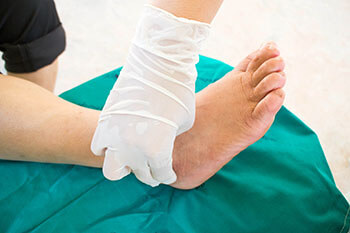
Wound care is particularly important for those with diabetes. It’s possible that what appears to be a small wound could turn into more severe foot complications down the road if left untreated. It’s common for those with diabetes to experience neuropathy. Neuropathy is a type of nerve damage that affects the body and can cause you to lose feeling in the feet. If you’re no longer experiencing feeling in your feet and a wound develops, it’s very possible it may go unnoticed if you don’t check your feet daily.

Some factors that contribute to the formation of wounds on the feet include wearing tightly fitted shoes, getting a pebble stuck in your shoe, or simply walking. What may appear to be just a small inconvenience such as a blister or callus can worsen over time, so it’s important to be safe and seek the attention of a professional. If you’ve developed a wound, it’s recommended that you try your best to keep the weight off of the area until you’re able to meet with a podiatrist.

Some ways to prevent wounds from developing include checking your feet daily for any injuries, washing and drying your feet daily, dressing for comfort and making sure your toes have enough space, and properly trimming your toenails straight across. Because wounds can lead to more severe complications, especially for those with diabetes, we recommend you speak with a podiatrist for professional guidance and a suggested plan for treatment.

Foot Orthotics (FAQs)

What are orthotics?
Orthotics are special inserts worn inside the shoes that are designed to treat a variety of foot and ankle problems. They can be custom-made specifically for your feet or bought over-the-counter at most major drug and department stores. Orthotics are generally light-weight, but can be rigid or soft depending on what they are designed to treat. They are often made with a firm foundation with cushioning materials on top.
What conditions can orthotics treat?
Orthotics can be used to correct foot deformities, help the feet and ankles function better, provide support, and reduce the risk of future injuries. They can be used to treat a variety of conditions. These include plantar fasciitis, flat feet, high arches, bunions, bursitis, Morton’s neuroma, Achilles tendinopathy, and many more. Orthotics may also be prescribed to help correct a dysfunctional gait or walking pattern.
Should I get over-the-counter or custom-made orthotics?
The type of orthotics you should get depends on the foot or ankle condition you have and what your treatment goals are. You should discuss your specific needs with your podiatrist to find the right orthotic to help you.
Can orthotics hurt your feet?
Generally, orthotics will not hurt unless they do not fit properly or are worn out. Some people believe that wearing orthotics, and particularly wearing them long-term, can weaken or otherwise harm the feet, however this is not the case. Orthotics are designed to help heal or manage foot and ankle problems to improve your mobility, comfort, and quality of life. If your orthotics are hurting you, let your podiatrist know as soon as possible so that they can figure out why and solve the problem.
When should I get new orthotics?
Orthotic inserts, even those that are custom-made, unfortunately are not built to last forever. Much like your shoes, they undergo wear and tear over time, especially if they are worn frequently. You may need new orthotics if you notice that your current ones are no longer helping relieve your symptoms, are uncomfortable, or are showing signs of wear and tear.

Connect With Us

Advanced Podiatric Procedures & Services in the Monmouth County, NJ: Little Silver (Long Branch, Tinton Falls, Asbury Park, Eatontown, Red Bank, Keansburg) and New York County, NY: New York, as well as Hudson County, NJ: Jersey City, Hoboken, Union City, West New York, Secaucus areas